By Haley Zahratka
•
April 25, 2026
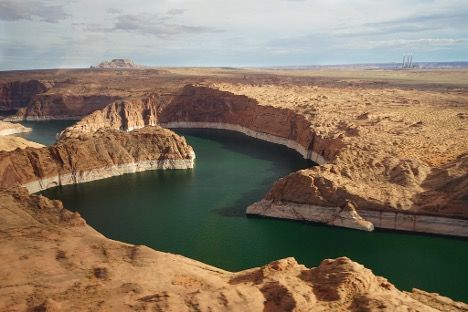
I. INTRODUCTION The Utah Board of Water Resources (UBWR) proposed the Lake Powell Pipeline Project (LPP) to address increasing water demands in Washington County, Utah. The pipeline is projected to be approximately 141 miles long, diverting water from the Colorado River, beginning at Lake Powell near the Glen Canyon Dam and ending in Washington County, Utah. The pipeline diverts water from Utah’s Upper Basin allocation, but its ultimate use remains in the Lower Basin. The “Law of the River,” which governs the Colorado River, comprises of federal laws, court decisions and decrees, contracts, regulatory provisions, and interstate compacts. The guidelines for the Colorado River expired in 2025, and a new management plan must exist by the fall of 2026. The Upper and Lower Basin states must reach an agreement on how to allocate the Colorado River, or the federal government will step in. The Law of the River does not provide explicit guidelines on whether Upper Basin water can be used in the Lower Basin; however, textual interpretation, common law, concerns about precedent, and the existence of other alternatives indicate that other options should be explored before the LPP is constructed. This blog post discusses the details of the LPP, stakeholder positions on the LPP, the laws that govern the Colorado River, interpretations of the Compacts of 1922 and 1948, relevant case law, the policy implications of the LPP, and, lastly, potential resolutions. II. LAKE POWELL PIPELINE PROJECT The UBWR proposed constructing the LPP to transport water from the Lake Powell Reservoir by pipeline approximately 141 miles to Washington County, Utah, delivering up to 86,249 acre-feet of water. The LPP water is allocated to Utah but remains used in the Lower Basin within Utah. In 2006 the Utah State Legislature passed the Lake Powell Pipeline Development Act, which authorized the construction of the LPP. The US Bureau of Reclamation published a Draft Environmental Impact Statement (DEIS), recommending the Southern Alternative as the preferred alternative for the LPP. The DEIS states that this alternative would meet Washington County’s water needs by 2060, as it is economical, provides water security, complies with the Lake Powell Pipeline Development Act, and does not require tribal agreement. The permitting process for the project remains paused since 2020, due to resistance from surrounding states. The DEIS was published in June of 2020, and on September 8, 2020, in response, the Colorado River Basin states requested that a Final EIS not be approved until all seven states reached an agreement regarding the project. Nonprofit groups called for the pipeline’s removal from the permitting process on December 18, 2023, stating that the Colorado River does not have excess water for the pipeline and that this should not maintain priority over other Colorado River water right issues. III. STAKEHOLDER POSITIONS The LPP’s proponents argue that the pipeline is needed to diversify the water supply and provide a reliable water source for residents of Washington County. The county is projected to have a population increase of 155% by 2060, and receives over six million visitors, with seasonal residents owning 20% of the homes. Proponents argue that the pipeline will protect the environment by keeping water flowing through the Colorado River system, ensuring the health of the ecosystem. The pipeline alleges to promote the economy by keeping employers in the state and to prevent drought by providing additional water supplies and storage. The primary LPP proponents include state and federally elected officials, such as Senator Mike Lee, as well as many local industry and utility providers, community leaders, and municipalities. Various grassroots groups oppose the LPP . The Utah Rivers Council (URC) contends that the pipeline is unnecessary, expensive, and destructive. The URC states that Washington County consumes water at more than double the national average because of low water rates, and that population growth has been exaggerated. The URC alleges that the pipeline will cost at least 2.24 billion dollars of taxpayer money, which will increase water and property taxes. The URC states that this will disturb wildlife, spread invasive species, and reduce water flows in the Grand Canyon. If the Colorado River experiences only a 9% decline in flow, a 3.2 million acre feet (maf) water demand-supply imbalance will result. The Western Resource Advocates argue that the prepared DEIS does not account for projected increases in water efficiency, thereby inflating water demand. IV. BACKGROUND The Colorado River Compact of 1922 divided states into the Upper and Lower Basin. Colorado, Wyoming, Utah, and New Mexico make up the Upper Basin, while Arizona, Nevada, and California make up the Lower Basin. Upper Basin water is comprised of the parts of the Upper Basin states where water from the Colorado River drains above Lees Ferry. The same provision controls the Lower Basin, but for waters below Lees Ferry. The Colorado River Compact, however, is wrought with miscalculations. When the Compact was drafted, it was believed that there was between 17 and 20 maf of water to allocate and therefore allocated 7.5 maf to each basin. This calculation was made during a period of unusually high water flows, and therefore, allocates more water allocated than available. The Compact also requires the Upper Basin to ensure at least 7.5 maf are delivered annually to the Lower Basin. Additionally, the Upper and Lower Basins must each deliver half of the annual 1.5 maf requirement under the 1944 U.S.-Mexico treaty. The Upper Basin states have a legal obligation to deliver this water, and if they do not, they may be subject to a “Compact Call” requiring the Upper Basin to reduce its water use to satisfy that obligation. This would have serious implications for major cities in Upper Basin states, as many possess water rights that are junior to the Compact. The Upper Colorado River Basin Compact of 1948 allocates water among the upper-basin states. After deducting the obligations required to comply with the 1922 Compact, Colorado is allocated 51.75%, Utah 23%, Wyoming 14%, and New Mexico 11.25%. The Compact of 1948 provides that if there is a Compact Call, water rights senior to November 24, 1922, are not subject to the call. The Colorado River Storage Project Act (CRPSA) came afterward to provide a stable system that allowed the Upper Basin states to make full use of their allocated water. The enactment of the CRPSA led to the authorization of the Flaming Gorge Dam and Reservoir, the Glen Canyon Dam, and Lake Powell. Lake Powell is the primary means of sending water to the Lower Basin. Beginning in 2000, the Colorado River system began to face drought concerns. This led to the 2007 Interim Guidelines, but with these guidelines expiring soon, new management guidelines are crucial. V. COMPACT INTERPRETATION The LPP raises the question of whether water from Utah’s Upper Basin can be used in St. George, Utah, in the Lower Basin. The Colorado River Compact of 1922 defines the Upper Basin as the portions of Arizona, Colorado, New Mexico, Utah, and Wyoming whose waters naturally flow into the Colorado River system. In Article VIII, it states, “[a]ll other rights to beneficial use of waters of the Colorado River System shall be satisfied solely from the water apportioned to that Basin in which they are situate.” This language seems to imply that water allocated to a basin must be used in that basin. However, the Compact of 1948 allocated 23% of Upper Basin consumptive water use generally to the State of Utah, not just the part of the state that is part of the Upper Basin. Additionally, the 1948 Compact subjected to the terms of the 1922 Compact, designates Upper Basin water based on drainage into the Colorado River, and no specific provision governs transbasin use in either Compact Agreement. Therefore, neither the 1922 nor the 1948 Compact provide explicit clarity on whether the use of Upper Basin water in the Lower Basin is permitted. VI. CASE LAW ANALYSIS Equitable apportionment, a federal common law doctrine, governs disputes between states as it pertains to their rights to interstate streams. The doctrine prevents states from forcing other states to follow the same water law system. Equitable apportionment aims to create a just allocation by considering many factors. The prior appropriation system primarily guides allocation, but physical conditions, climate, rate of return flow, consumptive use, storage water availability, and downstream or upstream impacts are all considered relevant. As states face the question of moving Upper Basin water for use in the Lower Basin, looking to a balancing test such as equitable apportionment offers a case-by-case analysis approach that is essential to an area of law as complex as the Law of the River. When applying this test to the LPP, the lack of storage water and the impact this would have on Lower Basin users weigh heavily against the construction of the LPP. Further, in Arizona v. California, the Supreme Court held that the Secretary of the Interior had broad powers to manage the Colorado River in the Lower Basin. The Secretary was not required to follow prior appropriation laws when allocating water. If the states of the Upper and Lower Basin are unable to come to a comprehensive interstate compact before the current guidelines expire, the LPP could also be subject to being decided by the Court and implemented by the Secretary, rather than being left up to the states to decide. VII. POLICY IMPLICATIONS If the LPP project receives a permit, it may set a precedent for other Upper Basin states to take similar actions, especially since the 1922 and 1948 Compacts do not explicitly bar interbasin transfers. If the LPP uses Utah’s allocated Upper Basin water for use in the Lower Basin, other Upper Basin states that do not utilize their full allocation may also attempt to take advantage of this “loophole.” However, Lake Powell continues to face lowered water level concerns. By December 2026, the water level may drop to a level at which hydropower cannot be generated. If Upper Basin states become more concerned with ensuring they receive what they are allocated, rather than focusing on renegotiating a water compact that addresses shortages, we will face an even more severe crisis in the coming years. VIII. POTENTIAL RESOLUTIONS The LPP is not the only solution to address concerns regarding access to water. Washington County could restructure its tax system to prevent water waste. The Washington County Water District (WCWD) collects enough money from property taxes that it enables the County to provide lower water rates. Washington County’s per-person water use is among the highest in the U.S., likely due to inexpensive water. WCWD could eliminate these property taxes, a tax most water districts do not collect in the West. This would benefit taxpayers and discourage water waste. Washington County could also install water meters, which could curtail secondary water use, just by showing users how much water they use. Secondary water users pay only an annual fee and therefore have no idea how much water they use, with some secondary water users overwatering by more than 100 percent. Resolutions such as these should be explored before removing water from Lake Powell. IX. CONCLUSION The LPP confronts an area of uncertainty regarding the 1922 and 1948 Compacts. When examining the language of these Compacts, nothing explicitly prevents the LPP from using Upper Basin water for Lower Basin use. However, the doctrine of Equitable Apportionment seems to indicate that if the LPP were to be litigated, it would not be found to be a reasonable measure, given the lack of water availability and the potential policy implications. Therefore, I advocate taking alternative approaches, such as restructuring Washington County’s tax structure or installing meters before constructing the proposed 141 mile pipeline. SOURCES U.S. Bureau of Reclamation, Lake Powell Pipeline Project Draft Environmental Impact Statement (2020). The Law of The River, U.S. Bureau of Reclamation, (March 2008), https://www.usbr.gov/lc/region/g1000/lawofrvr.html Ishan Thakore, A Colorado River Deadline Looms, Here Is What’s at Stake for Colorado, CPR News (Nov. 10, 2025, 3:15 PM), https://www.cpr.org/2025/11/10/colorado-river-negoations-impact-colorado/ Colorado River Compact, Nov. 24, 1922, https://www.usbr.gov/lc/region/pao/pdfiles/crcompct.pdf Devin Stetler, In This Issue: Sustainable Infrastructure: Toward a Utah Intentionally Created Surplus Program, 22 Sustainable Dev. L. & Pol’y. 4, 7 (2022). Upper Colorado River Basin Compact, Oct. 11, 1948, https://www.usbr.gov/lc/region/g1000/pdfiles/ucbsnact.pdf Lake Powell Pipeline, PERMITTING DASHBOARD, https://www.permits.performance.gov/permitting-project/other-projects/lake-powell-pipeline (last visited Dec. 16, 2025). Anastasia Hufham, The Lake Powell Pipeline: A Timeline, The Salt Lake Tribune, (Dec. 26, 2023, 11:14 AM), https://www.sltrib.com/news/environment/2023/12/26/lake-powell-pipeline-timeline/ Why The LPP?, LPP, https://lpputah.org/why-the-lpp/ (last visited Dec. 16, 2025). Project Benefits, LPP, https://lpputah.org/project-benefits/ (last visited Dec. 16, 2025). Anastasia Hufham, St. George Says It’s Counting on Getting Water from Lake Powell. Environmentalists Want to Stop the Project, Salt Lake Tribune, (Dec. 20, 2023, 4:39 PM). https://www.sltrib.com/news/environment/2023/12/20/lake-powell-pipeline-is-still/ The Lake Powell Pipeline Problem, No Lake Powell Pipeline, https://lake-powell-pipeline.org/ (last visited Dec. 16, 2025). Expensive, No Lake Powell Pipeline, https://lake-powell-pipeline.org/lake-powell-pipeline-expensive (last visited Dec. 16, 2025). Destructive, No Lake Powell Pipeline, https://lake-powell-pipeline.org/lake-powell-pipeline-destructive (last visited Dec. 16, 2025). Climate Crisis, No Lake Powell Pipeline, https://lake-powell-pipeline.org/lake-powell-pipeline-risky (last visited Dec. 16, 2025). What is the Lake Powell Pipeline?, Western Resource Advocates, https://westernresourceadvocates.org/we-save-water-and-protect-rivers/opposing-the-lake-powell-pipeline/ (last visited Dec. 16, 2025). Charles V. Stern, Pervaze A. Sheikh, Kristen Hite, Cong. Rsch. Serv., R45546, Management of the Colorado River: Water Allocations, Drought, and the Federal Role (2025). William A. Paddock & Lee H. Johnson, Colorado Water Law Benchbook 2.5 (2025) Colorado v. New Mexico, 459 U.S. 176 (1982). Nebraska v. Wyoming, 325 U.S. 589 (1945). Arizona v. California, 373 U.S. 546 (1963). Shannon Mullane, What’s Holding Up the Colorado River Negotiations? Experts Break Down the Sticking Points. The Colorado Sun, (Oct. 30, 2025, 4:08 AM) https://coloradosun.com/2025/10/30/colorado-river-negotiations-experts-sticking-points/ Shannon Mullane, Lake Powell Forecasts Show Hydropower Generation is at Risk Next Year as Water Levels Drop, Water Education Colorado (July 17, 2025) https://watereducationcolorado.org/fresh-water-news/lake-powell-forecasts-show-hydropower-generation-is-at-risk-next-year-as-water-levels-drop/ Simple Alternatives, No Lake Powell Pipeline, https://lake-powell-pipeline.org/lake-powell-pipeline-alternatives (last visited Dec. 16, 2025).