
Alternative Methods to Success: New ATMs seen as solutions to Colorado’s buy-and-dry problem
Alexandra Tressler • November 26, 2018

ATMs, not the cash withdrawing machines we all think of.


The Colorado Water Plan, released in 2015, called for the use of alternative transfer methods (“ATMs”) to help meet growing municipal water needs while preserving agricultural communities. However, very few of these projects have been established—due in part to cities’ reluctance toward temporary water supplies. But a new type of perpetual ATM may bring the assurances cities require and help make ATMs a viable alternative to the permanent sale of agricultural water rights and the negative outcomes of such buy-and-dry transfers.


ATMs have successfully moved water from agricultural irrigation to a variety of uses, including municipal, industrial, and environmental. Despite these victories, ATMs have been slow to catch on—particularly in Colorado, where ATMs are relatively new—due to uncertainty of how these deals will play out in the long term. ATMs are traditionally temporary leases of water from agricultural irrigators to municipalities, and the brief duration of these water rights has made cities reluctant to become involved in the process. However, a new kind of ATM that leases water in perpetuity may be the answer to questions of reliability and encourage new ATM projects in the future.


It is no secret that the arid western United States is running low on water, and drier, warmer weather could be the new normal in Colorado and the West. A recent study, commissioned by the Colorado Water Conservation Board (“CWCB”), found that Colorado’s average temperature has risen by about 2 degrees Fahrenheit over the last thirty years. But that has not stopped rapid population growth in urban and suburban centers, and warmer temperatures will challenge states’ ability to provide a reliable water supply to meet the competing water demands of rapidly growing cities, farms, and ecosystems. As more people move west, cities will have to find new, creative ways to provide sufficient water.


To meet municipal water demands, cities have increasingly purchased senior agricultural water rights, and permanently removed that water from the farms—a process known as “buy-and-dry.” While such transactions can be profitable for individual farmers, they threaten to undermine rural communities as the farmers and supporting businesses move out of the area, resulting the economic collapse of agricultural communities and environmental degradation. To combat the negative consequences of buy-and-dry, water users, researchers, and policy makers are developing innovative strategies and policies to improve the flexibility of western water law. Many states have adopted new policies that allow for water to be leased, rather than bought outright.


These alternative transfer methods have been used in other western states for decades, and Colorado is finally catching up, passing legislation that allows for a more streamlined, and less costly, process for implementing water transfers than traditional pathways through the water court system. The Colorado legislature has passed several bills in past ten yearsthat create pilot programs to test the legal and functional validity of ATMs and make ATMs easier to administer.


However, even though pilot programs such as the Catlin Canal Pilot Leasing-Fallowing project have been successful, the water world moves slowly. ATMs have been met with considerable skepticism from agricultural water rights holders and cities alike. Some farmers are concerned that ATMs will lead to their water rights being taken, and cities have concerns over the certainty and reliability of leased—rather than purchased—water. But a first-of-its-kind ATM developed between Larimer County and the City of Broomfield has provided an answer to the lack-of-certainty argument by establishing a lease that is operational in perpetuity.


CALIFORNIA AND ARIZONA

Several western states have long histories with ATMs. For example, California and Arizona have established various forms of rotational lease-fallowing agreements—wherein farmers forgo irrigating a portion of their land for a growing season and lease the saved water. In 2013, the Yuma Mesa Irrigation and Drainage District and the Central Arizona Groundwater Replenishment District entered into a pilot short-term fallowing program to help keep water in the Colorado River. In northern California, several water districts in Sacramento River Valley entered into one-year leases to provide water to a group of water districts, called the Westside Districts, to supplement their water needs during a drought, by fallowing parts of land historically used for rice farming. The southern California cities of San Diego and Los Angeles have temporary leased water from farmers in the Palo Verde and Imperial valleys for years, and these programs have helped meet municipal needs while keeping agricultural lands in production. Colorado legislators, looking to these and other examples, decided that if ATMs could work in those water-short states, they might work for Colorado, too.


COLORADO

Like other Western states, Colorado water law is rooted in the principles of prior appropriation. Under this doctrine, a water right is merely a usufructuary right, meaning that the water right holder has permission to use a state’s public water resources in a specific way defined by the type water right granted. However, that is not to say that there is no inherent property interest in a water right. Water rights can be sold, leased, conveyed, or donated, in whole or in part. Water rights include the right to change the type and place of use, as well as the point of diversion, so long as other water rights holders are not injuriously affected. To ensure no injury occurs when one water right holder wants to change the use or location of the right, applicants generally must go through a formal judicial process in Colorado’s water court system.


Unlike other Western states, Colorado has a dedicated court system for the establishment and transfer of water rights. While the Colorado water court system has received praise for its due process, fairness of outcomes, and expertise of water judges and referees, it can also be a time-consuming and expensive process. Despite recent efforts to improve efficiency, the water court process remains a difficult undertaking. Because of the time and money required to change a water right, temporary transfers of water are generally not seen as worth the effort. So permanent sale of agricultural water rights and the negative impacts of buy-and-dry continue. In order to protect agricultural communities and still provide water for growing cities, the Colorado Water Plan promotes the use of ATMs.


ATMs help prevent the negative consequences of buy-and-dry by allowing farmers to maintain legal ownership of their water rights, while temporarily transferring that water for municipal or industrial uses. Alternative transfer methods come in many different models, including rotational fallowing agreements, deficit irrigation, interruptible water supply agreements, payments for conservation, water banks, and crop switching. ATMs provide a streamlined permitting process that keeps water transfer cases out of the expensive and time-consuming water court. For example, an interruptible water supply agreement (“IWSA”), which allows water right holders to temporarily transfer their historical consumptive use to another water user without permanently changing the water right, can be approved by the state engineer (outside of water court) as an option agreement which can be exercised for up to three out of ten years and can be renewed by the state engineer for as many as three ten-year periods total (or, thirty years). Notification requirements for IWSA applicants ensure that potentially affected water users can object to the IWSA if they think their water rights may be injured. However, since ATMs are a relative newcomer to water management, establishing an ATM presents potential legal, financial, and structural challenges—problems that legislators in Colorado have been trying resolve.


The Colorado General Assembly has passed various bills designed to make water law more responsive to the challenges of today’s changing water allocation needs. In 2003, legislators passed a law that enables the use of IWSAs. Another bill, passed in 2013, clarified the rules for long-term water leases, helping keep these temporary change cases out of water court, saving applicants time and money. An additional piece of legislation, House Bill 13-1248 (codified at C.R.S. § 37-60- 115(8)), which was also passed in 2013 and extended in 2017, allows the Colorado Water Conservation Board to authorize up to fifteen rotational lease-fallowing pilot projects. While this bill has currently only produced a single project—the Catlin Pilot Project—that project has been successfully delivering benefits to participating farmers and municipalities alike for the past three years.


CATLIN PILOT PROJECT 

Approved in 2015, the Catlin Pilot Project is a ten-year ATM that makes senior water rights available for municipal use by rotationally fallowing a portion of irrigated land in the Lower Arkansas River Basin. Six farms signed on to the pilot project to provide water to the towns of Fountain, Security, and Fowler. The project, now three years in, has consistently provided great benefit to the farmers and the municipalities. In 2016 alone, the Catlin Pilot Project delivered more than 400 acre-feet of water to the municipal participants, and farmers received an average of $1004 per acre for each of the 237.9 acres fallowed.


However, since this was the first pilot project undertaken, reaching an agreement between the parties—and soothing the fears of other water rights holders in the Catlin area—took a great deal of work. The CWCB also had a number of terms and conditions about how to go about drying-up the land. For example, farmers are contractually obligated to prevent the spread of noxious weeds, blowing soils, and erosion—all of which are typical outcomes and concerns regarding fallowed land.


By all accounts, the Catlin Pilot Project has been a rousing success story for ATM use in Colorado. In all three years of operation, the participating farmers achieved temporary dry-up while controlling noxious weeds and preventing blowing soils and erosion. The revenue produced by leasing a portion of their water allowed farmers to make significant upgrades to their farms, such as laser leveling their fields, installing drip systems, and improving the soil quality on the fallowed lands. The municipalities have consistently received nearly their entire portion of consumptive use water from the pilot project.


The accomplishments of the Catlin Pilot Project generally demonstrate that rotational lease fallowing is a viable means for farmers to temporarily provide water to municipalities while keeping agricultural communities going. And the continued experience gained during the Catlin Pilot Project will help identify ways to streamline operations and administration for future rotational fallowing-leasing projects. For example, the lease-fallowing tool developed for the Catlin Pilot Project could be adapted for other leases throughout Colorado.


So why is there only one of these pilot projects? It’s not for a lack of interest of the farmers—the Lower Arkansas Valley Water Conservancy District’s executive director Jay Winner said he has 5000 leases for water available from farmers who want to temporarily lease their water rights to cities. But almost no cities have expressed interest in entering into such an agreement. One reason for this lack of interest could be due to the fact that for the first time since 2012, Colorado is not facing drought conditions. Another likely answer is that municipalities simply do not want temporary water supplies. Cities need to be certain that they have enough control over the water to ensure long-term reliability in supply.


HOLD-UPS

The water community tends to be cautious about innovations in water law, and ATMs are relative newcomers to Colorado water policy. Agricultural water rights holders harbor fears of ATMs reducing the amount of water they are entitled to, despite provisions in the statutes that specifically protect against such an occurrence. There are also concerns that ATMs may be attracting investment firms to purchase agricultural water rights as speculative investments and make a profit by leasing the water, which could lead to some agricultural land no longer being irrigated. For example, Boulder-based real estate investment and management company Conscience Bay has purchased several ranches in Colorado, and the company’s president has expressed interest in exploring ATMs to provide water for municipal, fishery, environmental or other uses. While traders have bought and sold water rights for decades, the practice has increased in recent years, due in part to investors seeing Western water shortages as a change to make a substantial profit.


An additional issue concerning ATMs is the fact that these projects require complex agreements that need a great deal of time and money to achieve, which can make cities hesitant to pursue them for a temporary water right. Given the fact that it can take years to solidify these agreements, a ten-year lease may be considered too costly when cities could easily purchase agricultural water rights instead. And while pilot projects like the Catlin Pilot Project may be useful to illuminate how an ATM could be implemented, the variances in hydrology across the state and the specific needs of any given municipality means that such projects cannot be thought of as a one-size-fits-all solution to be replicated in all areas.


Municipal water utilities prefer permanent water supplies over the temporary water provided by an ATM. Planning and development of new communities takes a great deal of time, effort, and money, and cities need to be sure that the water they procure for these future residents will be available when needed. It is easier and cheaper for cities to buy farmers’ water rights outright than invest in water that may not be available at the end of the lease period, especially if the farmer’s needs change and he or she decides not to renew the lease. Even a thirty-year lease for water may be too tenuous to build a reliable water supply for planning and building a community of full-time residents. If a city expands by building a new community, it needs to be certain that water will be available at all times—forever—not just for the next thirty years. This uncertainty has deterred cities from participating in ATMs and has furthered the practice of buy-and-dry in Colorado. However, in August 2016, a first of its kind perpetual ATM was finalized between Larimer County and the City of Broomfield—and it may be the answer to quelling concerns about long-term municipal water supply reliability.


MALCHOW FARM

It all started when the Malchow Farm outside of Berthoud, Colorado went into foreclosure. The farmer, who had leased the land for thirty years, could not afford the $8.4 million price tag, $6.5 million of which was made up of the 240 units of Colorado-Big Thompson Project water. Neither could Larimer County, who wanted to keep the farm in production. So, in 2016, Larimer County sought and found a partner to help shoulder some of the costs.


Working through the Larimer County Open Lands Program (“LCOLP”), Larimer County set out to prove that implementing a perpetual ATM water supply for a municipality was a workable solution to permanently drying-up the farm. Since LCOLP primarily deals in conservation, they were comfortable with the idea of a perpetual arrangement. After meeting with several municipal providers, the County and City of Broomfield agreed to enter into an InterGovernmental Agreement that included an innovative permanent water leasing agreement which keeps water on the farm while helping fill municipal water needs.


In the deal, Broomfield paid $3.77 million for: (a) an interruptible water supply agreement on 80 units of Colorado-Big Thompson (“C-BT”) water; and (b) full ownership of 115 units of Colorado-Big Thompson water with the ability for Larimer County to lease-back. The deal offset nearly half the purchase price for Larimer County, and saved Broomfield money by leasing the water, which was less expensive than purchasing it. This agreement allowed Larimer County to buy the Malchow Farm, conserve 211 acres of farmland along with its value as a community buffer and educational tool, and keep 125 units of C-BT water on the farm. And because the ATM uses C-BT water, which is administered by Northern Water Conservancy District (“Northern”) and its users follow Northern’s rules, the water transfer is not required to be adjudicated in water court.


Finalized in August 2016, Northern’s set of rules around sharing beneficial uses of C-BT water serves to minimizes potential injury to other users and reduces the cost of establishing water sharing agreements. Under the interruptible water supply agreement, Broomfield can get water from the Malchow farm three out of ten years and must pay $18,000 those years. While on the surface, this may look like a typical IWSA, this one is special because rather than only being allowed for a total of three ten-year periods, this IWSA has no such limit. Broomfield is assured that they will have the right to call for water in three out of ten years, forever.


The fact that this ATM is operational perpetually is what makes it so unique. While Broomfield does not own the water rights, they will always be able to call on them, which provides the necessary certainty missing in other types of ATMs. This ATM adds eighty acre-feet of ATM water toward the 2015 Colorado Water Plan’s goal of 50,000 acre-feet by 2050. The hope is that this groundbreaking perpetual ATM will provide landowners, conservation entities, municipalities, and water districts in Colorado with an additional tool to help negotiate future water sharing agreements as an alternative to buy-and-dry.


CONCLUSION

The wary water community in Colorado has been slow to embrace ATMs as tools to achieve a hydrological balance that allows cities and farms grow side by side by sharing water. The result has been a proliferation of buy-and-dry deals that leave agricultural communities in ruins. Given the choice, most agricultural water rights holders would prefer to lease their water over selling it outright. But ATMs will never prevail over buy and dry until they can provide easy (and reliable) access to water supplies for municipalities. Hopefully, the new permanent model of ATM developed by Larimer County and Broomfield can serve as a template that other communities can implement to provide municipal users with the certainty they require while maintaining agricultural lands.


SOURCESn

Mollie Schreck, Larimer County-Broomfield Pilot Project, Your Colo. Water Blog (Nov. 20, 2007), https://blog.yourwatercolorado.org/2017/11/20/larimer-county-broomfield-pilot-project/.


Lower Arkansas Valley Water Conservancy District & Lower Ark Valley Super Ditch Co., Annual H.B. 13-1248 Catlin Canal Co Rotational Land Fallowing-Municipal Leasing Pilot Project (2016), http://cwcbweblink.state.co.us/WebLink/0/doc/201619/Electronic.aspx.


Envtl. Defense Fund, Alternative Water Transfers in Colorado, (2016), https://www.edf.org/sites/default/files/alternative-water-transfers-colorado.pdf.


Brian Devine, Moving Waters: The Legacy of Buy-and-Dry and the Challenge of Lease-Fallowing in Colorado’s Arkansas River Basin, (2015) (Envtl. Studies Graduate Theses & Dissertations), https://scholar.colorado.edu/envs_gradetds/27/.


Marianne Goodland, PARCHED: Farms could help solve Colorado’s water shortage. So why aren’t they?, Colo. Independent (Jul. 12, 2017), http://www.coloradoindependent.com/166269/agricultural-water-transfer.


Larimer County, Broomfield Finalize Innovative Water Agreement, Larimer Cnty (Aug. 28, 2017), https://www.larimer.org/spotlights/2017/08/28/larimer-county-broomfield-finalize-innovative-water-agreement.


Allen Best, Flex Time For Colorado Water, Headwaters (Fall 2017), https://www.yourwatercolorado.org/cfwe-education/headwaters-magazine/fall-2017-alternative-transfers/951-flex-time-for-colorado-water.


Scott Campbell, The Super Ditch: Can Water Become a Cash Crop in the West?, Land Lines (Oct. 2015), http://www.lincolninst.edu/publications/articles/super-ditch.


Joshua Zaffos, Can leasing irrigation water keep Colorado farms alive? Farmers try to stop “buy and dry” by pooling water rights to supply growing cities, High Country News (Jun. 8, 2015), http://www.hcn.org/issues/47.10/can-leasing-irrigation-water-to-keep-colorado-farms-alive.


Connecting The Drops: Alternative Transfer Methods – A Solution to Colorado’s Water crisis?, KGNU (Nov. 20, 2017), http://news.kgnu.org/2017/11/connecting-the-drops-alternative-transfer-methods-a-solution-to-colorados-water-crisis/.


Colin Mayberry, Adaptive Water Management: Alternatives to Close the Supply-Demand Gap in the Northern Colorado Water Conservancy District, (2015) (Undergraduate Honors Theses), https://scholar.colorado.edu/honr_theses/861/.


Lower Arkansas Valley Water Conservancy District & Lower Ark Valley Super Ditch Co., Annual H.B. 13-1248 Catlin Canal Co Rotational Land Fallowing-Municipal Leasing Pilot Project (2017), http://www.lavwcd.com/catlin-pilot-project.html.


Colorado Cattlemen's Association, 2016 Ag Water Right Holder Survey Results Summary, (2016), https://www.coloradocattle.org/CMDocs/ColoradoCattlemen/2016%20Ag%20Water%20Survey%20Results%20Report.pdf.


Marianne Goodland, Lawmakers lament they “don’t have more influence” moving state water plan forward, Colo. Independent (May 26, 2017), http://www.coloradoindependent.com/165649/progress-state-water-plan-legislature.


Dennis Webb, Eyes on ag lands, Daily Sentinel (Mar. 3, 2018), https://www.gjsentinel.com/news/western_colorado/eyes-on-ag-lands/article_519205ac-1f7a-11e8-8cd6-10604b9f7e7c.html.


James E. McWhinney, Water: The Ultimate Commodity, Investopedia (Feb. 26, 2018), https://www.investopedia.com/articles/06/water.asp.
By Lexi Kay LeCroy April 25, 2026
Benjamin Franklin once said, “When the well is dry, we’ll know the worth of water.” Unsurprisingly, the precious resource he acknowledged is the same one that people fought and died over. While violent disputes used to provide the typical means to acquire water rights, states since then regulated water ownership in a manner suitable to their geographical location and purposes. Texas and Colorado take their own respective approaches to statutory regulations, particularly when focusing on aquifers. This article compares how Texas Groundwater Conservation Districts and Colorado Ground Water Management Districts regulate aquifer mining and depletion. Both states base their controlling schemes over water rights on the legal principle of “first in time, first in right.” However, Colorado assumed the Prior Appropriation Doctrine, Texas took on a hybrid version—the Rule of Capture. The Texas Legislature refining regulatory bodies governed mainly by said separate entities created by the state legislature supersedes the Rule of Capture. The Rule of Capture’s remnants remain in some of the current governing rules in Texas. Meanwhile, Colorado remains steadfast in its application of Prior Appropriation. Despite having different approaches, Texas and Colorado both created Groundwater Conservation Districts to manage areas statewide with little to no water. This blog focuses specifically on those districts and the statutory foundations upon which they rest. Regardless of the statewide structure governing water rights, both states share similar policy goals. In the face of environmental concerns, such as subsidence and the resulting evolving geological areas, both Texas and Colorado must address the ever-growing need for more water, both in and out of aquifers. I. State Approaches to Aquifer Regulation And Well Spacing A. Texas Groundwater Conservation Districts After the U.S. Constitution and federal laws, the Texas Legislature holds the ultimate authority to enact laws governing water rights and management. It delegates specific powers to state agencies and local entities to implement and enforce the Texas Water Code through the Texas Commission on Environmental Quality (TCEQ). The genuine “boots on the ground” enforcers specific to groundwater management are Groundwater Conservation Districts (GCDs). Texas granted GCDs the authority to regulate well spacing and groundwater production. Statutorily, these GCDs remain the state’s preferred method of groundwater management to preserve property rights across Texas while balancing conservation and development concerns; however, the state not always prioritizes considerations of conservation and development. Historically, Texas followed the Rule of Capture, which allows a landowner to pump water from beneath his or her property, even at the expense of his or her neighbor. The rule established in 1904 by the Texas Supreme Court in Houston & T.C. Ry. V. East, which held that a landowner had no legal remedy against a railroad company that had moved next door and drilled a larger well, causing the landowner’s well to go dry. The court’s simple solution for the landowner: drill a bigger, deeper well than the railroad. Over time, establishing GCDs addressed specific policy concerns and granted regulatory authority over groundwater. To simplify, Texas state law sets the framework; TCEQ rules govern broad permits and quality; and the GCDs manage groundwater production, depletion, and protection. It is interesting to note that, under Texas law, tributary groundwater is not defined separately from non-tributary groundwater. Instead, the statute creates two primary categories of water: surface water and groundwater. The primary focus centers more on each GCD’s ability to adopt rules suitable for each aquifer, subdivision of an aquifer, or geographic area overlying aquifer boundaries. This can account for the unique characteristics of each aquifer, especially when considering the varying climates across the state, as well as to categorize the aquifer’s physical attributes—i.e., what Colorado distinguishes as tributary or non-tributary. GCDs combine the physical characteristics of an aquifer with defining the “ best available science ” to combat issues that may arise. This boils down to utilizing “conclusions that are logically and reasonably derived using statistical or quantitative data, techniques, analyses, and studies that are publicly available to reviewing scientists and can be employed to address a specific question.” The relevant question that arises from this statutory line of thinking is this: Is the reliance on scientific methods too exclusionary of relevant human interests? There seems to be a fine line. While science remains a strong method for determining relevant environmental concerns, it is not always kind to the economic and personal interests of smaller parties, such as farmers and ranchers living in rural areas. B. Colorado Ground Water Management Districts As the state that first developed and implemented the Prior Appropriation Doctrine, Colorado remains known for its water courts and precedent governing all rights to water. The Prior Appropriation system dictates that appropriation occurs when someone removes water from a water source and then puts it to a beneficial use. The first person to take the water and put it to a beneficial use gains priority over subsequent appropriators, and once receiving a court decree verifying status, becomes a senior water right owner relative to subsequent appropriators. Senior owners’ priority over junior water right owners, with the underlying expectation that senior owners’ “call” for water fulfills before any other water owners. Notably, the Colorado Ground Water Management Act of 1965 (GMA) modified said Prior Appropriation system to prevent unreasonable aquifer depletion on Colorado’s Eastern Plains, where notably less water connects to surface streams. The GMA established the Colorado Ground Water Commission (GWC), which governs the Ground Water Management Districts (GWMDs). Both entities have jurisdiction over designated groundwater , which is statutorily distinct from tributary groundwater. Designated groundwater encompasses water located within designated basins that either (1) would not feed into decreed surface water rights, or (2) is in areas lacking a constant natural stream where groundwater serves as the primary water source for at least 15 years prior to the basin’s designation. Essentially, this boils down to water that provides a de minimus impact on surface streams. The GWC holds the authority to adjudicate designated groundwater rights only, as well as issue large capacity well permits. In contrast, the GWMDs represent local districts wherein there is more administrative power within their designated boundaries. GWMDs retain authority to regulate the use, control, and conservation of groundwater within their boundaries. GWMDs can adopt controls and regulations to minimize the lowering of the water table, subject to review and approval by the GWC. If anything, this specific governance over designated groundwater provides a balance of economic development with aquifer sustainability. II. Regulatory Mechanisms to Handle Drawdown & Depletion A. Texas Texas GCDs intend to regulate groundwater production to minimize aquifer drawdown, prevent subsidence, and protect water quality. To do this, GCDs can adopt rules to regulate well spacing to prevent well-to-well interference and reduce the depletion risk. GCDs can also limit groundwater production based on acreage and impose production limits to ensure sustainable aquifer use. GCDs consider a multitude of factors when implementing rules specific to drawdown and depletion regulation, including, but not limited to, hydrological conditions, recharge rates, and socioeconomic impacts, when estimating desired future conditions for aquifers. Further, Texas Water Code Chapter 36 grants GCDs discretion to regulate groundwater production to preserve historic or existing uses. The main workhorse provision for dealing with well-to-well interference and localized depletion focuses on district regulation of well spacing and production to prevent waste and the protection of groundwater reservoirs. Many GCD rules base production limits on acreage or tract size and impose minimum spacing between wells to reduce interference between cones of depression and avoid unreasonable impacts on existing wells. At the same time, other statutory requirements require most non-exempt wells to obtain permits, and districts must evaluate those well applications against their management plans and the regional “ desired future conditions .” Those desired future conditions essentially act as a statutory cap on how much depletion is acceptable in a particular aquifer. These implementations layer over the Rule of Capture, as well as case law, which push districts to balance their state-mandated code with potential takings claims when they limit pumping too aggressively. B. Colorado Colorado GWMDs, on the other hand, govern designated groundwater, and the aquifers they govern are already facing long-term depletion. Instead of the pure conservation mandate that Texas possesses, Colorado’s statutes primarily focus on preventing “unreasonable injury” or “material injury” to existing water rights, as laid out in specific well-permitting provisions. The Colorado Supreme Court previously interpreted these statutes to mean that prior appropriators are not entitled to a “frozen” water table; i.e., that some drawdown is statutorily allowed so long as it does not unreasonably impair earlier wells. Colorado’s permitting rules directly tie into well-to-well interference and aquifer mining. The GWC has to decide whether unappropriated groundwater is available and whether a proposed well will cause material injury to vested rights. It can deny or limit permits with conditions to follow if those standards are not met. In some situations, Colorado law requires augmentation or replacement plans, which provide means to replace depletions to avoid injury. Unlike Texas’s future conditions consideration, Colorado does not always aim to meet a specific target of drawdown; instead, the “unreasonable injury” and “material injury” language function as a legal limit for how much aquifer decline is tolerated within a designated basin. II. Challenges & Policy Considerations A. Comparison of the Challenges Each State Faces One of the biggest challenges that Texas must consider is that its framework sits on top of the old Rule of Capture background, while also telling GCDs that they are supposed to conserve and protect the water that landowners think they own. The Texas Water Code recognized that landowners have “ ownership of groundwater in place .” It then clarifies how that ownership is defined by stating that it is subject to “ regulation under this chapter and under the rules adopted by a district.” At the same time, another section lays out what seems like an ambitious policy: districts must provide for “the conservation, preservation, protection, recharging, and prevention of waste of groundwater and of groundwater reservoirs or their subdivisions, and to control subsidence caused by withdrawal of groundwater.” In other words, GCDs essentially respect private property rights but also keep aquifers from being mined and the land from sinking, which is a bit of a tightrope. Texas courts also added pressure by recognizing takings-like claims in groundwater regulation. The Texas Supreme Court previously acknowledged in Edwards Aquifer Authority v. Day that landowners possess a constitutionally protected interest in groundwater in place, and district regulations that go “too far” could potentially be held responsible for providing compensation. This could reasonably make a district nervous about utilizing the full extent of its statutory powers under provisions governing spacing and production, or even permitting, to really clamp down on drawdown and depletion. Thus, a district might actually be squeezed from three directions at once: landowners invoking precedent, regional desired future conditions that say “you can’t pump that much,” and a statutory conservation and subsidence mandate that doesn’t really create a clear safe harbor. It is not shocking that implementation looks uneven from district to district. Colorado’s challenges look a little different because the foundational system is Prior Appropriation, but many of the practical roadblocks are similar. The Colorado GMA creates the category of “designated groundwater” and puts it under the jurisdiction of the Colorado GWC and local GWMDs. While considering the plain language of the statute seems clarifying, in reality, figuring out what is designated versus tributary, and how much connection there is to streams, can be complicated and politically touchy. Additionally, the GMA assumes that some level of aquifer mining will occur and then tries to keep it within tolerable bounds, which, in theory, is logical. The GWC is supposed to issue large capacity well permits only when there is unappropriated groundwater and when existing rights won’t suffer substantial injury. As noted in Jaegar v. Colorado Ground Water Commission, the Colorado Supreme Court made it clear that prior appropriators in designated basins do not guarantee that the water table will stay where it was when they drilled; rather, the GMA protects from unjustified impairment. This gives the GWC and the local districts some flexibility, but also means that they must make controversial judgment calls about how much decline is too much. The Colorado Supreme Court also stressed that the GWC must weigh economic development and beneficial use against aquifer conditions when deciding whether additional wells are compatible with statutory standards. Thus, it seems that Colorado regulators constantly balance the statutory foundation of Prior Appropriation against the explicit decision in the GMA to allow planned depletion. B. Takeaways Each State Could Learn from The Other One obvious notion that Colorado might learn from Texas is how to be more explicit about conservation and subsidence in the text of the statutes. Texas regulations remain quite blunt in stating that GCDs exist to conserve and preserve groundwater, recharge aquifers, prevent waste, and “ control subsidence caused by withdrawal of groundwater.” That clear-cut statement of policy gives Texas districts a straightforward rule when they adopt strict spacing or production limits or when they justify denying permits. While Colorado’s designated-basin provisions in Title 37 speak about “beneficial use” and “material injury,” those provisions are less direct about long-term conservation goals. As climate change and long-term declines start to intensify, Colorado might benefit from adding a more modern conservation and aquifer-protection policy section. Colorado could also look at Texas’s “desired future conditions” approach as a model for more explicit basin-wide planning. Texas code requires districts within a specific GCD area to adopt said conditions for each relevant aquifer, and then the Texas governing authority uses those estimated future standards to create modeled available groundwater values that effectively set a ceiling on permissible pumping. This process forces a collective conversation about how much drawdown is acceptable by a given year, which is quite necessary when considering juggling economic and environmental interests along with consumptive and domestic uses. Colorado’s GWC and GWMDs already retain their own authority to adopt basin rules, but there is less emphasis on calculating a specific future condition for the aquifer. Borrowing a concept such as a “designated basin future condition” could give stakeholders in Colorado a clearer sense of how the law is trying to guide long-term aquifer conditions, rather than leaving that mostly implicit in GWC decisions. On the flip side, Texas might take a page from Colorado’s more candid treatment of aquifer mining and the concept of “unreasonable injury” in designated basins. The GMA basically admits that some aquifers will draw down over time, but insists that the drawdown managed so existing appropriators are not unreasonably or materially injured. Case law reinforces the idea that regulators should determine what decline is manageable and consistent with statutory standards, and then enforce that line. Texas’s “desired future conditions” framework does something similar in practice, but the statutory text is not strong enough to fully meet this bar. While some Texas code discusses conservation and planning, primary pieces of the code do not squarely address that, in some places, the political choice might be to allow a controlled mining of the aquifer to support agriculture or municipal growth for a limited time. Adding clearer verbiage about when and how planned depletion is allowed may make the entirety of the Texas Water Code more honest and, arguably, easier to defend in court. Texas could also learn from Colorado’s more formal standard for material injury to protect existing users. In designated basins, the Colorado GWC must deny or issue conditional permits if doing so would cause material injury to vested water right owners. Texas districts certainly mention protecting “historic use” and preventing waste, and are supposed to consider socio-economic impacts and aquifer conditions when setting “desired future conditions,” but the code does not provide explicit parameters for when the changes to an existing well are deemed unacceptable. Taking a more explicit, “no unreasonable impairment of existing wells” standard and embedding it in the Texas code could help districts justify tougher decisions to cut permitted amounts or deny new wells in already lowered or stressed areas. III. Conclusion Texas and Colorado carved out their own statutory paths to address aquifer mining, depletion, and drawdown that reflects each state’s distinct legal traditions and environmental considerations. Texas relies on locally driven GCDs, guided by somewhat vague, broad conservation and subsidence control goals. Colorado’s GWMDs, created under the GMA, establishes a regime for designated groundwater, setting acceptable limits on aquifer decline through the Prior Appropriation standard. Both systems illustrate the difficulty of using law to ration a finite renewable resource. Overall, these systems suggest that future statutory refinements should focus on sharpening planning goals by integrating climate considerations and creating clearer statutory standards through updated terminology for the tolerable level of drawdown to support economic development and water-supply reliability. SOURCES Tex. Const., Art. XVI, § 59(a). Tex. Water Code § 5.013. Tex. Water Code § 36.116; see also Tex. Water Code § 36.101. Houston & T.C. Ry. v. East, 81 S.W.279, 280 (Tex. 1904). Id. Tex. Water Code § 36.001. See § 36.116. Colo. Rev. Stat. § 37-90-103. Tex. Water Code § 36.0015(a). Id. Water Rights, Colo. Div. of Water Rights, https://dwr.colorado.gov/services/water-administration/water-rights . Colo. Rev. Stat. § 37-90-101; see also Jaeger v. Colo. Ground Water Com., 746 P.2d 515, 520, 523 (Colo. 1987). Colo. Rev. Stat. § 37-90-103. Colo. Ground Water Comm’n, Colo. Div. of Water Rights, https://dwr.colorado.gov/public-information/boards-and- commissions#:~:text=Colorado%20Ground%20Water%20Commission%20(CGWC,(Division% 20of%20Water%20Resources). Colo. Rev. Stat. § 37-90-130. Colo. Rev. Stat. § 37-90-131. Colo. Rev. Stat. § 37-90-111; see generally Front Range Res., LLC v. Colo. Ground Water Comm’n, 415 P.3d 807, 811 (Colo. 2018). Tex. Water Code § 36.0015(a). § 36.116; see also Tex. Special Dist. Loc. L. Code § 8887.103. Tex. Water Code § 36.108. § 36.116. Id.; see also Tex. Water Code § 36.101. Id. See Tex. Water Code § 36.1132; Tex. Water Code § 36.1071; Tex. Water Code § 36.108. § 36.108. See generally Edwards Aquifer Auth. v. Day, 369 S.W.3d 814, 832-33 (Tex. 2012). Colo. Rev. Stat. § 37-90-137. Jaeger, 746 P.2d at 520, 523. Colo. Rev. Stat. § 37-90-137. Colo. Rev. Stat. § 37-90-103(12.7); Colo. Rev. Stat. § 37-92-305. § 37-90-137. Tex. Water Code § 36.002. Id. Tex. Water Code § 36.0015. See Edwards Aquifer Auth., 369 S.W.3d at 832-833. Tex. Water Code § 36.116; Tex. Water Code § 36.113. Colo. Rev. Stat. § 37-90-103. Colo. Rev. Stat. § 37-90-137. See Jaeger, 746 P.2d at 520, 523. See id. See Front Range Res., LLC, 415 P.3d at 811-12. Tex. Water Code § 36.116. See id.; see also https://dwr.colorado.gov/public-information/boards-and- commissions#:~:text=Colorado%20Ground%20Water%20Commission%20(CGWC,(Division% 20of%20Water%20Resources). See Colo. Rev. Stat. § 37-90-137. See Tex. Water Code § 36.108. Id. Colo. Rev. Stat. § 37-90-131. Colo. Rev. Stat. § 37-90-137. See Jaeger, 746 P.2d at 520, 523; see also Front Range Res., LLC, 415 P.3d at 811-12. See Tex. Water Code § 36.108. See Tex. Water Code § 36.0015. Colo. Rev. Stat. § 37-90-137. See Tex. Water Code § 36.116; see also Tex. Water Code 36.108. Colo. Rev. Stat. § 37-90-137; see Jaeger, 746 P.2d at 520, 523.
By Haley Zahratka April 25, 2026
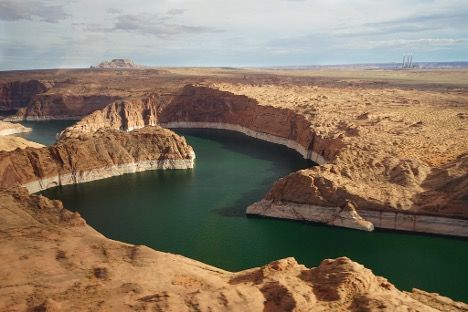
I. INTRODUCTION The Utah Board of Water Resources (UBWR) proposed the Lake Powell Pipeline Project (LPP) to address increasing water demands in Washington County, Utah. The pipeline is projected to be approximately 141 miles long, diverting water from the Colorado River, beginning at Lake Powell near the Glen Canyon Dam and ending in Washington County, Utah. The pipeline diverts water from Utah’s Upper Basin allocation, but its ultimate use remains in the Lower Basin. The “Law of the River,” which governs the Colorado River, comprises of federal laws, court decisions and decrees, contracts, regulatory provisions, and interstate compacts. The guidelines for the Colorado River expired in 2025, and a new management plan must exist by the fall of 2026. The Upper and Lower Basin states must reach an agreement on how to allocate the Colorado River, or the federal government will step in. The Law of the River does not provide explicit guidelines on whether Upper Basin water can be used in the Lower Basin; however, textual interpretation, common law, concerns about precedent, and the existence of other alternatives indicate that other options should be explored before the LPP is constructed. This blog post discusses the details of the LPP, stakeholder positions on the LPP, the laws that govern the Colorado River, interpretations of the Compacts of 1922 and 1948, relevant case law, the policy implications of the LPP, and, lastly, potential resolutions. II. LAKE POWELL PIPELINE PROJECT The UBWR proposed constructing the LPP to transport water from the Lake Powell Reservoir by pipeline approximately 141 miles to Washington County, Utah, delivering up to 86,249 acre-feet of water. The LPP water is allocated to Utah but remains used in the Lower Basin within Utah. In 2006 the Utah State Legislature passed the Lake Powell Pipeline Development Act, which authorized the construction of the LPP. The US Bureau of Reclamation published a Draft Environmental Impact Statement (DEIS), recommending the Southern Alternative as the preferred alternative for the LPP. The DEIS states that this alternative would meet Washington County’s water needs by 2060, as it is economical, provides water security, complies with the Lake Powell Pipeline Development Act, and does not require tribal agreement. The permitting process for the project remains paused since 2020, due to resistance from surrounding states. The DEIS was published in June of 2020, and on September 8, 2020, in response, the Colorado River Basin states requested that a Final EIS not be approved until all seven states reached an agreement regarding the project. Nonprofit groups called for the pipeline’s removal from the permitting process on December 18, 2023, stating that the Colorado River does not have excess water for the pipeline and that this should not maintain priority over other Colorado River water right issues. III. STAKEHOLDER POSITIONS The LPP’s proponents argue that the pipeline is needed to diversify the water supply and provide a reliable water source for residents of Washington County. The county is projected to have a population increase of 155% by 2060, and receives over six million visitors, with seasonal residents owning 20% of the homes. Proponents argue that the pipeline will protect the environment by keeping water flowing through the Colorado River system, ensuring the health of the ecosystem. The pipeline alleges to promote the economy by keeping employers in the state and to prevent drought by providing additional water supplies and storage. The primary LPP proponents include state and federally elected officials, such as Senator Mike Lee, as well as many local industry and utility providers, community leaders, and municipalities. Various grassroots groups oppose the LPP . The Utah Rivers Council (URC) contends that the pipeline is unnecessary, expensive, and destructive. The URC states that Washington County consumes water at more than double the national average because of low water rates, and that population growth has been exaggerated. The URC alleges that the pipeline will cost at least 2.24 billion dollars of taxpayer money, which will increase water and property taxes. The URC states that this will disturb wildlife, spread invasive species, and reduce water flows in the Grand Canyon. If the Colorado River experiences only a 9% decline in flow, a 3.2 million acre feet (maf) water demand-supply imbalance will result. The Western Resource Advocates argue that the prepared DEIS does not account for projected increases in water efficiency, thereby inflating water demand. IV. BACKGROUND The Colorado River Compact of 1922 divided states into the Upper and Lower Basin. Colorado, Wyoming, Utah, and New Mexico make up the Upper Basin, while Arizona, Nevada, and California make up the Lower Basin. Upper Basin water is comprised of the parts of the Upper Basin states where water from the Colorado River drains above Lees Ferry. The same provision controls the Lower Basin, but for waters below Lees Ferry. The Colorado River Compact, however, is wrought with miscalculations. When the Compact was drafted, it was believed that there was between 17 and 20 maf of water to allocate and therefore allocated 7.5 maf to each basin. This calculation was made during a period of unusually high water flows, and therefore, allocates more water allocated than available. The Compact also requires the Upper Basin to ensure at least 7.5 maf are delivered annually to the Lower Basin. Additionally, the Upper and Lower Basins must each deliver half of the annual 1.5 maf requirement under the 1944 U.S.-Mexico treaty. The Upper Basin states have a legal obligation to deliver this water, and if they do not, they may be subject to a “Compact Call” requiring the Upper Basin to reduce its water use to satisfy that obligation. This would have serious implications for major cities in Upper Basin states, as many possess water rights that are junior to the Compact.  The Upper Colorado River Basin Compact of 1948 allocates water among the upper-basin states. After deducting the obligations required to comply with the 1922 Compact, Colorado is allocated 51.75%, Utah 23%, Wyoming 14%, and New Mexico 11.25%. The Compact of 1948 provides that if there is a Compact Call, water rights senior to November 24, 1922, are not subject to the call. The Colorado River Storage Project Act (CRPSA) came afterward to provide a stable system that allowed the Upper Basin states to make full use of their allocated water. The enactment of the CRPSA led to the authorization of the Flaming Gorge Dam and Reservoir, the Glen Canyon Dam, and Lake Powell. Lake Powell is the primary means of sending water to the Lower Basin. Beginning in 2000, the Colorado River system began to face drought concerns. This led to the 2007 Interim Guidelines, but with these guidelines expiring soon, new management guidelines are crucial. V. COMPACT INTERPRETATION The LPP raises the question of whether water from Utah’s Upper Basin can be used in St. George, Utah, in the Lower Basin. The Colorado River Compact of 1922 defines the Upper Basin as the portions of Arizona, Colorado, New Mexico, Utah, and Wyoming whose waters naturally flow into the Colorado River system. In Article VIII, it states, “[a]ll other rights to beneficial use of waters of the Colorado River System shall be satisfied solely from the water apportioned to that Basin in which they are situate.” This language seems to imply that water allocated to a basin must be used in that basin. However, the Compact of 1948 allocated 23% of Upper Basin consumptive water use generally to the State of Utah, not just the part of the state that is part of the Upper Basin. Additionally, the 1948 Compact subjected to the terms of the 1922 Compact, designates Upper Basin water based on drainage into the Colorado River, and no specific provision governs transbasin use in either Compact Agreement. Therefore, neither the 1922 nor the 1948 Compact provide explicit clarity on whether the use of Upper Basin water in the Lower Basin is permitted. VI. CASE LAW ANALYSIS Equitable apportionment, a federal common law doctrine, governs disputes between states as it pertains to their rights to interstate streams. The doctrine prevents states from forcing other states to follow the same water law system. Equitable apportionment aims to create a just allocation by considering many factors. The prior appropriation system primarily guides allocation, but physical conditions, climate, rate of return flow, consumptive use, storage water availability, and downstream or upstream impacts are all considered relevant. As states face the question of moving Upper Basin water for use in the Lower Basin, looking to a balancing test such as equitable apportionment offers a case-by-case analysis approach that is essential to an area of law as complex as the Law of the River. When applying this test to the LPP, the lack of storage water and the impact this would have on Lower Basin users weigh heavily against the construction of the LPP. Further, in Arizona v. California, the Supreme Court held that the Secretary of the Interior had broad powers to manage the Colorado River in the Lower Basin. The Secretary was not required to follow prior appropriation laws when allocating water. If the states of the Upper and Lower Basin are unable to come to a comprehensive interstate compact before the current guidelines expire, the LPP could also be subject to being decided by the Court and implemented by the Secretary, rather than being left up to the states to decide. VII. POLICY IMPLICATIONS If the LPP project receives a permit, it may set a precedent for other Upper Basin states to take similar actions, especially since the 1922 and 1948 Compacts do not explicitly bar interbasin transfers. If the LPP uses Utah’s allocated Upper Basin water for use in the Lower Basin, other Upper Basin states that do not utilize their full allocation may also attempt to take advantage of this “loophole.” However, Lake Powell continues to face lowered water level concerns. By December 2026, the water level may drop to a level at which hydropower cannot be generated. If Upper Basin states become more concerned with ensuring they receive what they are allocated, rather than focusing on renegotiating a water compact that addresses shortages, we will face an even more severe crisis in the coming years. VIII. POTENTIAL RESOLUTIONS The LPP is not the only solution to address concerns regarding access to water. Washington County could restructure its tax system to prevent water waste. The Washington County Water District (WCWD) collects enough money from property taxes that it enables the County to provide lower water rates. Washington County’s per-person water use is among the highest in the U.S., likely due to inexpensive water. WCWD could eliminate these property taxes, a tax most water districts do not collect in the West. This would benefit taxpayers and discourage water waste. Washington County could also install water meters, which could curtail secondary water use, just by showing users how much water they use. Secondary water users pay only an annual fee and therefore have no idea how much water they use, with some secondary water users overwatering by more than 100 percent. Resolutions such as these should be explored before removing water from Lake Powell. IX. CONCLUSION The LPP confronts an area of uncertainty regarding the 1922 and 1948 Compacts. When examining the language of these Compacts, nothing explicitly prevents the LPP from using Upper Basin water for Lower Basin use. However, the doctrine of Equitable Apportionment seems to indicate that if the LPP were to be litigated, it would not be found to be a reasonable measure, given the lack of water availability and the potential policy implications. Therefore, I advocate taking alternative approaches, such as restructuring Washington County’s tax structure or installing meters before constructing the proposed 141 mile pipeline. SOURCES U.S. Bureau of Reclamation, Lake Powell Pipeline Project Draft Environmental Impact Statement (2020). The Law of The River, U.S. Bureau of Reclamation, (March 2008), https://www.usbr.gov/lc/region/g1000/lawofrvr.html Ishan Thakore, A Colorado River Deadline Looms, Here Is What’s at Stake for Colorado, CPR News (Nov. 10, 2025, 3:15 PM), https://www.cpr.org/2025/11/10/colorado-river-negoations-impact-colorado/ Colorado River Compact, Nov. 24, 1922, https://www.usbr.gov/lc/region/pao/pdfiles/crcompct.pdf Devin Stetler, In This Issue: Sustainable Infrastructure: Toward a Utah Intentionally Created Surplus Program, 22 Sustainable Dev. L. & Pol’y. 4, 7 (2022). Upper Colorado River Basin Compact, Oct. 11, 1948, https://www.usbr.gov/lc/region/g1000/pdfiles/ucbsnact.pdf Lake Powell Pipeline, PERMITTING DASHBOARD, https://www.permits.performance.gov/permitting-project/other-projects/lake-powell-pipeline (last visited Dec. 16, 2025). Anastasia Hufham, The Lake Powell Pipeline: A Timeline, The Salt Lake Tribune, (Dec. 26, 2023, 11:14 AM), https://www.sltrib.com/news/environment/2023/12/26/lake-powell-pipeline-timeline/ Why The LPP?, LPP, https://lpputah.org/why-the-lpp/ (last visited Dec. 16, 2025). Project Benefits, LPP, https://lpputah.org/project-benefits/ (last visited Dec. 16, 2025). Anastasia Hufham, St. George Says It’s Counting on Getting Water from Lake Powell. Environmentalists Want to Stop the Project, Salt Lake Tribune, (Dec. 20, 2023, 4:39 PM). https://www.sltrib.com/news/environment/2023/12/20/lake-powell-pipeline-is-still/ The Lake Powell Pipeline Problem, No Lake Powell Pipeline, https://lake-powell-pipeline.org/ (last visited Dec. 16, 2025). Expensive, No Lake Powell Pipeline, https://lake-powell-pipeline.org/lake-powell-pipeline-expensive (last visited Dec. 16, 2025). Destructive, No Lake Powell Pipeline, https://lake-powell-pipeline.org/lake-powell-pipeline-destructive (last visited Dec. 16, 2025). Climate Crisis, No Lake Powell Pipeline, https://lake-powell-pipeline.org/lake-powell-pipeline-risky (last visited Dec. 16, 2025). What is the Lake Powell Pipeline?, Western Resource Advocates, https://westernresourceadvocates.org/we-save-water-and-protect-rivers/opposing-the-lake-powell-pipeline/ (last visited Dec. 16, 2025). Charles V. Stern, Pervaze A. Sheikh, Kristen Hite, Cong. Rsch. Serv., R45546, Management of the Colorado River: Water Allocations, Drought, and the Federal Role (2025). William A. Paddock & Lee H. Johnson, Colorado Water Law Benchbook 2.5 (2025) Colorado v. New Mexico, 459 U.S. 176 (1982). Nebraska v. Wyoming, 325 U.S. 589 (1945). Arizona v. California, 373 U.S. 546 (1963). Shannon Mullane, What’s Holding Up the Colorado River Negotiations? Experts Break Down the Sticking Points. The Colorado Sun, (Oct. 30, 2025, 4:08 AM) https://coloradosun.com/2025/10/30/colorado-river-negotiations-experts-sticking-points/ Shannon Mullane, Lake Powell Forecasts Show Hydropower Generation is at Risk Next Year as Water Levels Drop, Water Education Colorado (July 17, 2025) https://watereducationcolorado.org/fresh-water-news/lake-powell-forecasts-show-hydropower-generation-is-at-risk-next-year-as-water-levels-drop/ Simple Alternatives, No Lake Powell Pipeline, https://lake-powell-pipeline.org/lake-powell-pipeline-alternatives (last visited Dec. 16, 2025).